|
| Fellow Boston Red Sox slugger Jimmy Foxx greets Ted Williams' after Williams' three-run homer in the first inning April 14, 1942, in Boston. Williams went 3-for-4 in the Red Sox's 8-3 season-opening victory over the Philadelphia Athletics. (Getty Images) |
One thing among many you must say for Ted Williams: When Opening Day came around, he was ready to answer the bell.
Williams hit safely in 13 of 14 Opening Day games for the Boston Red Sox, with a .444 average and .880 slugging average, three homers, seven doubles, a triple, 14 RBIs and 13 runs scored.
Only in the 1958 opener, when he was limited to a pinch-hit appearance, did he fail to get a hit.
Because of injuries and the Korean War, Williams did have to miss four Opening Days in the 1950s. But when he could take his place in the lineup, he delivered, right through his final season. Williams swatted a homer his first time up at Washington in his swan-song campaign of 1960.
Even when slowed by a broken foot at the start of his historic 1941 season in which he batted .406 -- last player to hit .400 -- he put in a pinch-hitting appearance on Opening Day. And he delivered a game-winning single in a 7-6 victory over the Senators at Boston's Fenway Park.
Even when he'd sat out for three full seasons because of World War II, Williams was ready when all the boys were back in 1946. On his second time up of the season, he hit a solo homer to help the Red Sox beat the Senators 6-3.
Here's a look at Williams' best Opening Days:
-- Probably his best opener came in his final year before entering the service, on April 14, 1942, before only 9,901 at Fenway. Teddy Ballgame went 3-for-4 with a homer and three RBIs in an 8-3 victory over the Philadelphia Athletics.
Ted wasn't a drinker, but he certainly started the year with a belt -- a three-run homer off Phil Marcheldon three batters into the bottom half of the first inning, with Dom DiMaggio and Johnny Pesky aboard. Pesky, who became known as "Mr. Red Sox" during a lengthy career in Boston as a player, manager, coach and broadcaster, and a lifetime .302 hitter, was making his major league debut. He'd finish the season with a rookie record 205 hits before, like Williams, entering the service for three years.
Williams added run-scoring singles in the second and seventh innings and walked in the sixth. He grounded out to first base in the fourth, with Pesky on third, for the only blemish at bat on the day.
Postscript: The 1942 Red Sox finished with a 93-59 record, good for a second straight runner-up finish in the American League, nine games behind the New York Yankees. It was a nice improvement over 84-70 and 17 games back of the Yanks in '41. They slid back in the war years but in 1946 won their first pennant since 1918.
 |
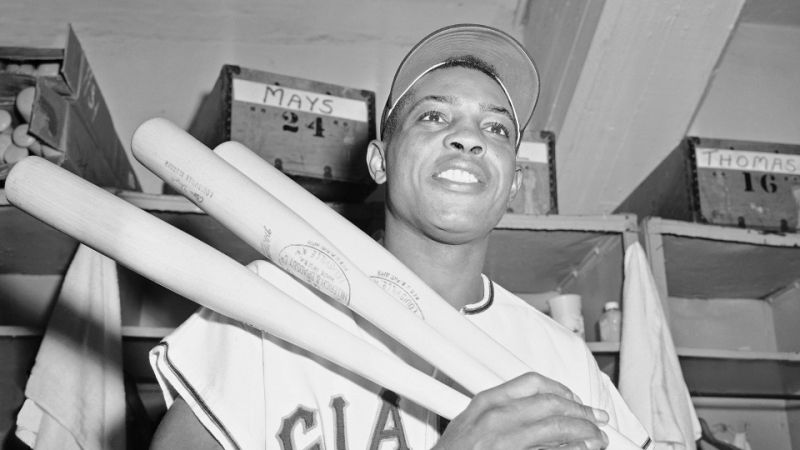
| When it came to Opening Day, Ted Williams came out swinging. The Boston Red Sox legend hit safely in 13 of 14 Opening Day games with a .444 average and .880 slugging average, three homers, seven doubles, a triple, 14 RBIs and 13 runs scored. |
-- The April 18, 1950, lid-lifter also got off to a rousing start, but the 31,822 on hand at Fenway left shell-shocked. In a game between bitter rivals who'd battled it out to the final day for the American League pennant the year before, the Red Sox blew leads of 9-0 and 10-4 as the defending world champion New York Yankees scored 11 runs in the final two innings to snare a 15-10 victory.
Williams' day mirrored his team's. The defending AL MVP, who'd received his award before the game, finished 2-for-3 with three runs scored and two RBIs. But he flied out to center field off Joe Page in his final turn at bat, leading the bottom of the ninth, after the bottom had fell out for Boston.
His season started with a run-scoring double to left off Allie Reynolds, a not-often-seen opposite-field hit for Ted. After he drove in DiMaggio, he came around to score on Bobby Doerr's single, and the 1950 Red Sox were off to a 3-0 opening-game lead.
Williams drove in DiMaggio again in the second, this time with a single to center, giving Boston a 4-0 lead.
When last seen pitching, Reynolds had thrown 12 shutout innings in the 1949 World Series coming off a 17-6 season. But he didn't have it this day, giving up seven runs and leaving with none out in the fourth.
"The Chief" found a way around Williams in the fourth by walking him, but he was gone after Al Zorilla's single scored Williams, giving Boston a 6-0 lead.
The Yankees kept pitching around Williams as Fred Sanford in the fifth and Don Johnson in the seventh each issued him bases on balls. Williams scored his third run of the day for a 10-4 lead in the seventh when Billy Goodman drew a bases-loaded walk.
Then the roof caved in on Boston as the Yankees exploded for nine runs in the eighth off four Red Sox pitchers. The rally was punctuated by a two-run double by Johnny Mize and two-run singles by Billy Johnson and Billy Martin. For Martin it was his second at-bat in his first major league game -- and his second hit of the inning.
“An explosion that all but leveled Bunker Hill,” The New York Times' John Drebinger wrote of the Yankees' uprising, as quoted by Alan Raylesberg in a Society for American Baseball Reseach Games Project article.
It wasn't a good day for pitching standouts on either side. Red Sox starter Mel Parnell, coming off a season in which he'd led the major leagues with 25 wins, gave up eight runs and left with none out in the eighth.
Much had been attached to just the first of 154 games. “(The) pennant could be lost here and now,” the New York Times' Arthur Daley wrote before the game.
In the aftermath, the Boston Traveler declared that if the Yankees “win the American League pennant — and now they are
supremely confident that they will — and if the Red Sox don’t win the pennant —
and nobody’s sure that they will — the opening game of the American League
season will have settled the pennant race.”
Postscript: Well, the game didn't quite decide the pennant. After finishing one game behind the Yankees in 1949, the Red Sox were four back and in third place at the end of 1950. Williams' absence for two months after he shattered his elbow making a diving catch against the wall in the All-Star Game probably cost the BoSox the flag.
-- Williams' last big Opening Day came before 32,563 at Fenway on April 17, 1956. He went 3-for-4 with an RBI and a run scored in a 8-1 Red Sox victory over the Baltimore Orioles.
Williams walked off Bill Wight and scored on Mickey Vernon's single in the first inning to give Boston a 2-0 lead. He doubled to left off Babe Berrer to score Goodman in the eighth for Boston's final run, then gave way to a pinch runner.
In between he doubled with two outs in the second off Hal Brown but was left stranded; grounded out back to Brown in the fourth; and singled to center with two out and stayed there in the sixth.
Postscript: By this time the Red Sox were no longer pennant contenders. They finished 1956 in fourth place for a fourth straight season at 83-71, 13 games behind the Yankees.
-- Williams went 2-for-4 with a double and two RBIs on April 15, 1947, in a 7-6 win over Washington before 30,822 at Fenway. But missed opportunities, including a couple on the basepaths, cost Williams a chance at an even bigger day.
Williams started the year with a single to right off Early Wynn that scored -- who else? -- DiMaggio and gave Boston a 1-0 lead. But when Doerr followed with a double, left fielder Joe Grace combined with second baseman Jerry Priddy on a relay to catcher Al Evans to throw out Williams trying to score. It was out No. 3.
Williams doubled in the third but was thrown out trying to stretch it into a triple, the relay going Buddy Lewis in right to Mark Christman at shortstop to Cecil Travis at third. An Eddie Pellagrini homer earlier in the inning had given Boston a 2-0 lead.
With none out and runners at first and second and the Red Sox still up 2-0 in the fifth, Williams went out on a ball to Priddy. Wynn retired Williams again in the seventh on a grounder to Priddy, but this time Pesky was on third and Williams got him home for his second RBI, increasing Boston's lead to 6-2.
The Senators rallied to tie it in the eighth, but Doerr's sacrifice fly with one out in the bottom of the inning scored Pellagrini with what proved to be the winning run.
Wynn, in the seventh year of his 23-season Hall of Fame career, walked Williams intentionally to load the bases for Doerr, after Wynn had wild-pitched Pesky to second.
Postscript: After winning their pennant in 1946 and falling to the St. Louis Cardinals in the World Series, the Red Sox faded to third in 1947 with an 83-71 mark, 14 games behind the Yankees.
Williams had two other Opening Days with two hits.
He was 2-for-3 with an RBI in a 3-2 win at Philadelphia in 1949.
He was 2-for-4 with a double in a 1-0 win at Washington in 1940.
In the next year he signaled Opening Day heroics to come when, despite being hobbled by a broken foot, he batted for Earl Johnson in the ninth inning and singled in Frankie Pytlak to give the Red Sox their 7-6 win over Washington on April 15, 1941.
Although he went only 1-for-5 on April 16, 1946, at Washington, Williams' lone hit, in his first game back after three years in the service of Uncle Sam, was certainly momentous.
After grounding out to first in his first at-bat, Williams homered his next time up against Roger Wolff, with two out in the third. That gave Boston a 2-0 lead on the way to a 6-3 victory.
In the only year in which Williams failed to hit safely on Opening Day, Williams batted for Don Buddin in the eighth and grounded out to second off Johnny Kucks in 1958. The Yankees defeated the Red Sox 3-1.
Two years later Williams launched his final season by connecting for a solo homer off Washington's Camilo Pascual in the second inning. It was the only run Pascual gave up in a 10-1 win on a day when he struck out an Opening Day record 14 batters. Williams went 1-for-2 with a walk before giving way in the seventh to a defensive replacement.
The home run by
Williams was his 493rd lifetime, tying him with Lou Gehrig on the all-time list. He'd finish the year with
29 homers and 521 lifetime, tied for 21st on the career ledger.
It was a fitting final opening statement by Williams and also a fitting start to his last season, which ended with a homer in his last at-bat.
His bat never rested.
Sources:
Ted Williams career (with links to daily breakdowns by year): https://www.retrosheet.
Additional background came from various sources on the Retrosheet and Society for American Baseball Research's Biography Project and Games Project websites, as well as baseballreference.com